Tekijä: admin (a)

  • Helsingin seudun & yliopiston Maan ystävien säännöllinen kokoontuminen (etäkokous)

    Helsingin seudun & yliopiston Maan ystävät kokoontuu ti 7.4.2020 kello 18-20. Kokous pidetään koronatilanteen takia etäkokouksena Jitsi-videokokouspalvelussa.

    Luvassa on toiminnansuunnittelua ja keskustelua ajankohtaisista asioista. Tarvittaessa puhutaan englantia tai tulkataan. Tervetuloa!

    Ilmoittaudu viimeistään 7.4. klo 16 osoitteeseen: helsinki [at] maanystavat.fi Osallistumislinkki lähetetään ilmoittautuneille ennen kokousta.

    Friends of the Earth Helsinki region & university will have a meeting on Tuesday, April 7th from 6 to 8 PM online at the Jitsi video conference service due to the corona situation.

    There will be planning of upcoming activities and discussions. If need be, the meeting will be held in English or a translation provided. Welcome!

    Sign up to the meeting by April 7th 4 PM to: helsinki [at] maanystavat.fi The Jitsi link will be sent to the participants before the meeting.

  • Pulp and Bioenergy Company’s Claim of Green Leadership Fails Fact Check

    A discussion document released by the Environmental Paper Network (EPN) unveils the social and environmental risks associated with the Finnish company UPM-Kymmene and its operations in Uruguay, and highlights the importance of strong social and environmental risk management policies and close scrutiny of individual investments.

    UPM is one of the world’s largest producers of pulp and bioenergy and recently announced that CDP, formerly Carbon Disclosure Project, had recognised “UPM’s exceptional leadership for its environmental performances, for its actions to mitigate climate risk”. However the scale of the UPM’s claims are not supported by current science.

    EPN objects for instance to the company’s claims that its exotic tree plantations established in Uruguay constitute a carbon sink of approximately 24 million tonnes “that did not exist 30 years ago.”

    Sergio Baffoni, EPN International forest campaign coordinator said: “The 24 million tonnes carbon sink exists only in theory, not in reality. The trees planted by UPM in Uruguay will not store carbon indefinitely, but will be intensively managed, logged and used to produce paper (1), while part of it is immediately burned to generate electricity.”

    A recent scientific study from Uruguay measured the loss of 16.6 tonnes of soil organic carbon per hectare in soils under 20 year-old Eucalyptus sp. plantations. Across the country, UPM controls around 184,000 hectares of land planted with Eucalyptus sp. and Pinus Radiata. A simple calculation of the research’s conclusion (16.6 tonnes/ha) and multiplying it by UPMs land base, (154,800 ha of Eucalyptus sp. plantations) results in an estimated loss of more than three million (3,054,400) tonnes of soil organic carbon degraded by UPM in establishing its plantations. The inclusion of those plantations managed by UPM’s 600 independent suppliers in Uruguay would further increase the amount of attributable soil carbon loss.

    Luisa Colasimone, EPN International coordinator, said: “UPM’s claims to climate change leadership, preventing deforestation and improving water security do not stand a realistic fact check. UPM’s projects in Uruguay, which include the further expansion of eucalyptus plantations, and the building of a new pulp mill in Paso de los Toros, can have serious impacts on water resources and climate protection, as well as other environmental and social impacts.” (2)

    The replacement of historical natural grasslands with eucalyptus plantations has eroded biodiversity and carbon storage. For centuries, natural grassland, partially used as traditional extensive pasture, extended in the areas now occupied by UPM plantations. The subtropical Campos savannah in Uruguay not only hosts unique biodiversity, but also stores large amounts of carbon in their extensive root systems under the ground. This is also true for the grasslands used as traditional pasture. A large part of this stored carbon has been released from the soil where eucalyptus plantations substituted the natural grasslands.

    EPN strongly encourages all financiers and investors to reduce their social and environmental risk in the pulp and paper industry by strengthening their institutional policies following the EPN’s Green Paper, Red Lines recommended standards, which list the minimum requirements for pulp and paper industry projects to avoid harm to people and the environment.

    –end–

    Notes to Editors
    (1) Paper is a product with a very short lifespan. A large majority of sub-products are disposed of within a few hours of their first use. While some wood products do store a portion of their carbon in long-term carbon ‘pools,’ for paper products this is simply not the case.
    (2) UPM-Kymmene Corporation: UPM signs a EUR 750 million revolving credit facility with a margin tied to long-term biodiversity(…).

    Contacts:

    Sergio Baffoni, sergio [at] environmentalpaper.org, ‭+49 162 3812528‬

    Ville-Veikko Hirvelä, ville-veikko.hirvela [at] maanystavat.fi

  • Hallituksen kokous ja poikkeustilan vaikutukset kevään toimintaan

    Maan ystävien hallitus kokousti maaliskuussa poikkeuksellisesti etäyhteyden kautta Suomeen levinneen koronapandemian ja sen aiheuttaman poikkeustilan vuoksi. Kriisitilanne vaikuttaa radikaalisti järjestöjen toimintaan, sillä ihmiset eivät voi kokoontua ja tavata toisiaan normaalisti. Kevääksi suunnitellut tapahtumat on jouduttu perumaan, niistä esimerkkeinä kansalaisliikkeitä yhteen kokoava Sosiaalifoorumi ja perinteinen Maailma kylässä -festivaali, joihin MY:n oli tarkoitus osallistua. Toivon mukaan epidemia on ohi syksyyn mennessä ja tapahtumien järjestäminen jälleen mahdollista. Silloin on suunnitelmissa mm. Friends of the Earth Internationalin yleiskokous Saksassa, johon osallistuu edustajia myös Maan ystävistä. Mielenkiintoinen tilaisuus on myös YK:n kansainvälinen konferenssi kemikaaliturvallisuudesta, joka on määrä järjestää lokakuussa.
    Hallituksen kokouksessa pohdittiin myös Maan ystävien kevätvuosikokouksen järjestelyitä, sillä pandemian vuoksi vaihtoehtoina on joko siirtää kokous tai pitää se etäyhteyden kautta. Vuosikokous päätettiin järjestää suunnitellusti huhtikuussa etäkokouksena. Opintokeskus Sivis ja SOSTE Suomen sosiaali ja terveys ry järjestivät yhdistyksille avuksi webinaarin, jossa annettiin vinkkejä etäkokouksen järjestämiseen.
    Maan ystävien toimistolla on muutto edessä loppukeväästä lähestyvän remontin vuoksi, joten uusia tiloja on etsitty ja siihen liittyviä asioita on käyty hallituksen kokouksissa läpi. Maan ystävien oma väentapaaminen jouduttiin perumaan ja sen sijaan järjestetään uuden toimiston tuparit, näillä näkymin elokuussa.
    Toivotan omasta puolestani paljon tsemppiä MY jäsenille ja aktiiveille haastavassa nykytilanteessa. Pidetään huolta itsestämme ja toisistamme!


    Tanja Pulliainen

  • Friends of the Earth Study Circle

    Friends of the Earth Study Circle

    Friends of the Earth Helsinki are organizing a study circle that is about to have its first session on Wednesday, April 1st, at 18.00. The meeting will be online. The language of this study circle is English.

    In the study circle, we will meet every two weeks to discuss chapters of a book (or similar) that we agreed upon beforehand. We have identified two media that we will go through in the next couple of meetings:

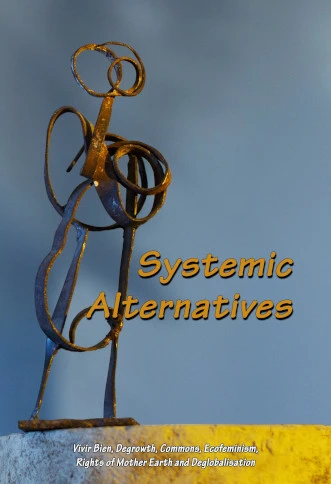
    • The freely available book ”Systemic Alternatives” by various authors (description and link below)
    • Environment-related episodes of the podcast ”The Ezra Klein Show”

    In the next meeting, the discussion will be about the following two things:

    • Chapters 1 and 2 of ”Systemic Alternatives” (Introduction and ”Vivir Bien” by Pablo Solón)
    • The Ezra-Klein-Show episode called: ”We live in The Good Place. And we’re screwing it up.” (description and link below)

    If you would like to participate without having read or listened to the material, you are still welcome to join.

    To participate in the meeting, you can use a web browser or a smartphone app. There is no need to register anywhere.

    If you use the web browser on your computer, you can participate without installing any additional software by visiting the following address around the time of the meeting:
    https://meet.jit.si/FoE-Helsinki-Study-Circle_2020
    Note that Chrome or Chromium are recommended at this point. The browser will ask you to allow the use of the microphone and webcam. If you don’t have a webcam or don’t want to use it, that’s fine. Please make sure in the sound settings of your computer that the microphone is not muted. Headphones or a headset are recommended for better audio quality.

    If you want to participate with a smartphone, download the ”Jitsi Meet” app (available for Android and iOS) and then enter the room name FoE-Helsinki-Study-Circle_2020 to join the call. (In the app settings, https://meet.jit.si must be set as the server, but this should be the default.)

    Material

    Systemic Alternatives

    Website: https://systemicalternatives.org/2017/03/10/book-systemic-alternatives/
    PDF freely available: https://systemicalternatives.files.wordpress.com/2017/03/sa-final-ingles-pdf2.pdf

    Summary

    The premise of this publication is that we are living a systemic crisis that can only be solved through systemic alternatives. Humanity is facing a complex set of crises from environmental, economic, social to civilizational crisis. All of these crises are part of a whole. We cannot solve one of these crises without addressing the others.

    The construction of complementarities between Vivir Bien, degrowth, commons, ecofeminism, Mother Earth rights, deglobalisation and other visions is essential to forge systemic alternatives to capitalism, productivism, extractivism, patriarchy and anthropocentrism. The main goal of this publication is to promote a constructive and creative dialogue between these different visions.

    The Ezra Klein Show

    Official website: https://www.vox.com/ezra-klein-show-podcast

    Next session’s episode:

    We live in The Good Place. And we’re screwing it up.
    Available on various sources for podcasts; for example: https://www.stitcher.com/podcast/vox/the-ezra-klein-show/e/64883521

    Summary

    Welcome to the first episode of our climate cluster. This isn’t a series about whether “the science is real” on climate change. This is a series about what the science says — and what it means for our lives, our politics, and our future.
    I suspect I’m like a lot of people in that I accept that climate change is bad. What I struggle with is how bad. Is it an existential threat that eclipses all else? One of many serious problems politics must somehow address?
    I wanted to kick off the series with someone who knows the science cold. Kate Marvel is a research scientist at NASA’s Goddard Institute for Space Studies and a professor at Columbia University’s Department of Applied Physics and Mathematics. But Marvel isn’t just a leading climate scientist. She’s also unique in her focus on the stories we tell each other, and ourselves, about climate change, and how they end up structuring our decisions. We discuss:

    • How a climate model actually works
    • Why this is the good place
    • Why there is so much variation in climate scientists’ predictions about global temperature increases
    • Why global warming is only one piece of the much larger problem of climate change
    • Why a hotter planet is more conducive to natural disasters
    • The frightening differences between a world that experiences a 2°C temperature increase as opposed to a 5°C temperature increase
    • Whether the threat of climate change requires solutions that break the boundaries of conventional politics
    • The underlying stories that animate much of the climate debate
    • Whether the planet can sustain continued economic growth
    • What it means to “live morally” amid climate change

  • Helsingin seudun Maan ystävien kokoontuminen 10.3.

    Helsingin seudun Maan ystävien kokoontuminen 10.3.

    Helsingin seudun & yliopiston Maan ystävät kokoontuu ti 10.3.2020 kello 18-20. Paikkana on Helsingin yliopiston ylioppilaskunnan järjestötila Ulrika (ks. alla).

    Luvassa on tulevan toiminnan suunnittelua, keskusteluja ja jotakin vegaanista naposteltavaa. Tarvittaessa puhutaan englantia tai tulkataan. Tervetuloa!

    Järjestötila Ulrika sijaitsee Domus Gaudiumissa (Leppäsuonkatu 11) Etu-Töölössä. Sisäänkäynti on Leppäsuonkadun varrella pienellä aukiolla pyörätelineiden vieressä. Ovella on puhelinnumero, johon soitettuasi sinut tullaan päästämään sisälle. Ulrikaan päästäkseen ei tarvitse kulkea portaita (rakennuksessa on hissi), mutta sisätiloissa on joitakin kynnyksiä.

    * * * * *

    Friends of the Earth Helsinki region & university will have a meeting on Tuesday, March 10 from 6 to 8 P.M. in the student space Ulrika (see below).

    There will be planning of future activities, discussions and some vegan snacks. If need be, the meeting will be held in English or a translation provided. Welcome!

    Ulrika is a shared space for student associations located in the building Domus Gaudium (Leppäsuonkatu 11) in Etu-Töölö. The entrance to the building is on a small square on Leppäsuonkatu next to the bike racks. There will be a phone number at the door that you should call, so that someone can come and let you in. Ulrika can be accessed without using stairs (there’s an elevator in the building), but within the space there are some thresholds.

  • English-speaking study circle: first meeting Wed 18 Mar

    English-speaking study circle: first meeting Wed 18 Mar

    The English-speaking group within Friends of the Earth Helsinki is starting a study circle on topics chosen by participants. The first gathering of this circle is on Wednesday the 18th of March at 6 P.M. online (due to the corona virus).

    Our study circles usually work so that texts are selected together, participants read them in their own time and gatherings are devoted to discuss the texts in question (and any other subjects that spring to mind). In the first meeting we will decide what to read and at what pace, and all proposed texts will be introduced briefly. If you want to propose a text (book, article, report, play, blog post etc., also other types of media can be considered), be prepared to introduce it to others. You don’t necessarily have to have read the text. Also, we want to keep the study circle approachable, so that participants don’t need particular expertise beforehand, so very advanced theoretical or technical stuff is not that suitable for this.

    Themes should somehow connect to what Friends of the Earth are dealing with, but this can be quite broad. So far texts have been proposed around the themes of climate change (IPCC reports), critiques of extractivism and new communication technologies, systemic alternatives and social ecology.

    Due to the corona virus, the meeting has been moved from Ulrika to some suitable online platform. Please sign up for the study circle beforehand by e-mail (to the address below), so we can send you the link to the online meeting. We will use something like Jitsi Meet, so that you won’t need to install anything – just an up-to-date web browser should suffice. At least Chrome should work OK, there have been some problems with Firefox lately.

    If you have any questions, you can contact us by e-mail: helsinki [at] maanystavat.fi

    Welcome!

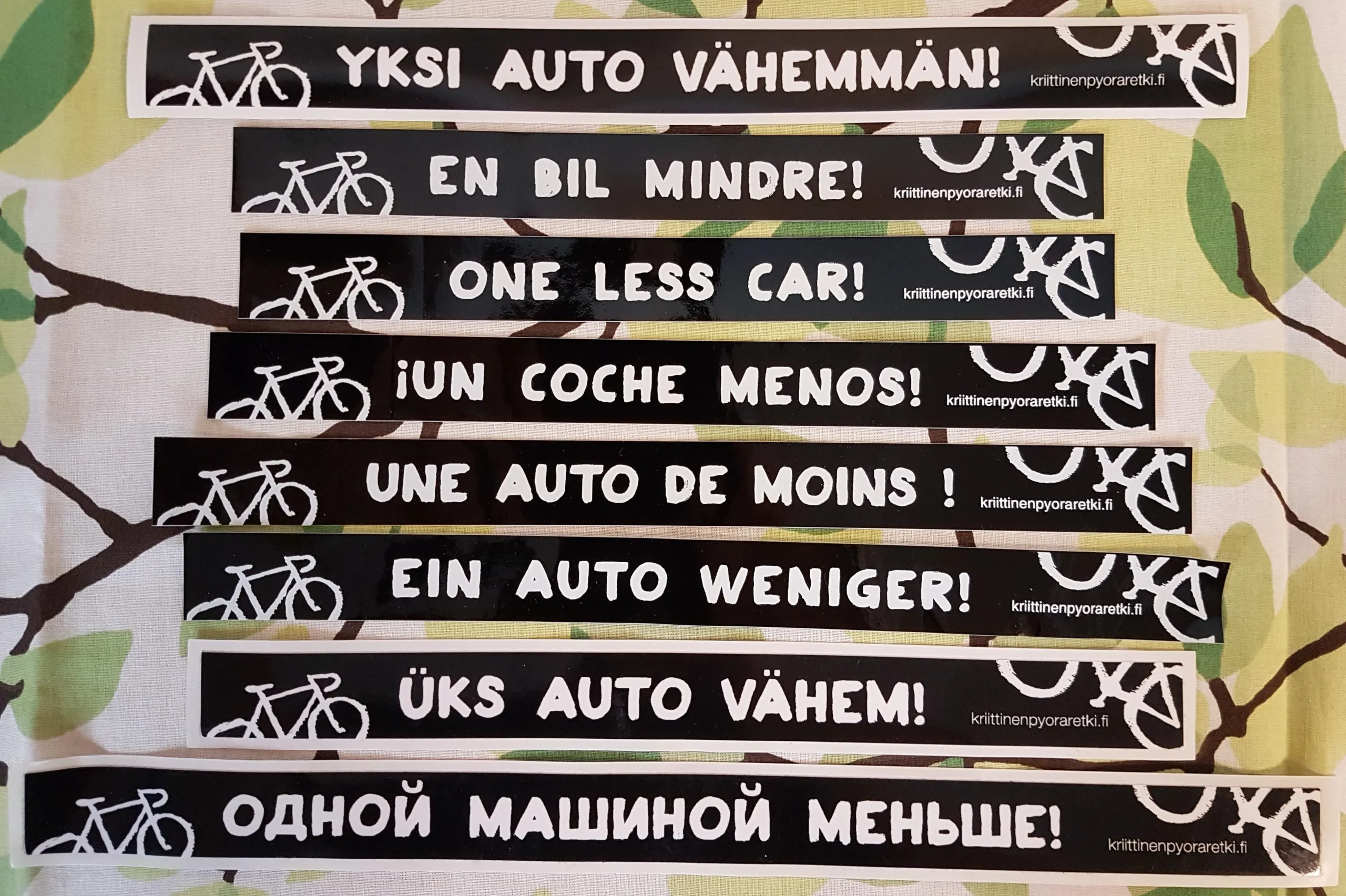
  • Liity Maan ystäviin: lahjaksi Yksi auto vähemmän -tarra

    Liity Maan ystäviin: lahjaksi Yksi auto vähemmän -tarra

    Liittymällä Maan ystävien jäseneksi autat meitä toimimaan ilmastokriisin pysäyttämisen, ihmisoikeuksien ja sosiaalisen oikeudenmukaisuuden puolesta. Kun liityt nyt, saat lahjaksi kantaaottavan Yksi auto vähemmän -tarran pyörääsi koristamaan. Säänkestävä tarra on saatavilla kuudella eri kielellä: suomi, ruotsi, englanti, espanja, ranska, saksa, venäjä ja viro. Tarrapohja on musta ja teksti valkoinen. Lahjan saa kun liittyy 31.8.2020 mennessä. Tuotteella ei ole vaihto- eikä palautusoikeutta. Maan ystävät ry maksaa toimituskulut.

    Liittyminen käy kätevästi tällä lomakkeella. Jäsenmaksu on 30 € vuodessa (10 € vähävaraisilta). Kirjoita liittymislomakkeen lisätietoja-kohtaan minkäkiellisen tarran haluat. Kirjoita myös jos et halua tarraa.

    Riippumattomuuden ja toiminnan jatkuvuuden kannalta jokainen jäsenmaksu on korvaamattoman arvokas pienelle järjestöllemme. Näinä poikkeuksellisina aikoina on jäsenten tuki vielä tavallistakin tärkeämpi. Kanna sinäkin kortesi kekoon paremman maailman puolesta ja liity nyt! Jos olet jo jäsen, voit auttaa jäsenhankinnassa vinkkaamalla tarjouksesta kavereillesikin.

    Jäsenenä olet tervetullut maksutta kaksi kertaa vuodessa järjestettäviin väentapaamisiin. Jäsenenä olet myös äänioikeutettu ja pääset vaikuttamaan järjestön kehittämiseen ja päätöksiin vuosikokouksissa.

    Jäsenyydelläsi tuet aktiivista ja monipuolista, vapaaehtoisvoimin tehtävää toimintaamme, josta voit lukea lisää alta. Sääntömme näet täältä.

    Lisätiedot & yhteydenotot jäsenasioissa:

    toimisto@maanystavat.fi

    puh/Telegram/Whatsapp: 045 886 3958

    Toiminta vuonna 2020:

    Maan ystävien toiminta on aktiivista ja monipuolista! Jäsenenä tuet paikallista kansalaistoimintaa: jäsenmaksuista palautetaan rahaa paikallisryhmille seudun jäsenmäärän mukaisesti. Aktiivista paikallista toimintaa on ympäri Suomea.

    Maan ystävien valtakunnallinen toiminta tehdään toimintaryhmissä:

    Ilmastotoiminnassa vaikutetaan energia- ja ilmastopoliittisiin kysymyksiin paikallisella, valtakunnallisella ja kansainvälisellä tasolla. Hiilivapaa Suomi -kampanja keskittyy vaatimaan yrityksiä toimimaan sen mukaisesti, että ilmaston lämpeneminen voidaan rajoittaa 1,5 asteeseen. Kampanjan pääkohde vuonna 2020 on Fortum, joka omistaa saksalaisen Uniperin kautta valtavan määrän hiilivoimaa Euroopassa. Lentoverokampanja seuraa lentoveroa vaativan kansalaisaloitteen eduskuntakäsittelyä ja järjestää aloitteen hyväksymistä tukevaa toimintaa.

    Pelastetaan Amazonin sademetsät -kampanja edistää Amazonin sademetsien suojelua ja metsäkadon pysäyttämistä Suomen ja EU:n päättäjille sekä yrityksille suunnatun vaikuttamisen kautta.

    Alkuperäiskansat ja yhteys maahan ja metsään -ryhmä jatkaa työtään alkuperäiskansojen ja yhteisöllisten maata ja metsää koskevien oikeuksien edistämiseksi.

    Ruokatoiminta tukee toiminnallaan vegaanisen kasvisruoan edistämistä sekä ekologisesti, sosiaalisesti ja kulttuurisesti kestävää paikallista ruoantuotantoa. Ryhmä on myös mukana akateemista tutkimusta ja järjestötoimintaa yhdistävässä ”Ilmastokestävyys keittiössä – ruokakulttuurin murroksen arkiset mahdollisuudet” -hankkeessa, joka edistää ilmastokestäviä kasvisruokavaihtoehtoja joukkoruokailussa.

    Kaivosryhmä tutkii Pirkanmaan kultakaivosten ympäristöongelmia ja tiedottaa niistä. Ryhmä jatkaa myös Kaapelinkulman kulta -valokuvanäyttelyn esittämistä.

    Ydinvoimaryhmä keskittyy Fennovoiman ydinvoimalahankkeen vastaiseen kamppailuun osana globaalia ydinvoimanvastaista liikettä.

    Vesiryhmä tiedottaa maailman vesikriisistä piilovesi- ja vesijalanjälkinäkökulmasta paikallisella tasolla sekä osallistuu kansainväliseen toimintaan.

    Maaoikeus- ja metsätoiminta toimii luonnon monimuotoisuuden köyhtymisen pysäyttämiseksi kansallisesti ja kansainvälisesti.

    Sosiaalifoorumitoiminta on mukana järjestämässä Suomen ja Tampereen sosiaalifoorumeita. Yhteistyötä tehdään myös Euroopan (ESF) ja Maailman (WSF) sosiaalifoorumien tasolla.

    Taloudellisen oikeudenmukaisuuden toiminta jatkaa vapaakauppasopimusten kriittistä seurantaa ja siihen liittyvää kansallista ja kansainvälistä toimintaa. Ryhmä osallistuu myös YK:n yrityksiä sitovan ihmisoikeussopimuksen laadintaprosessiin ja siihen liittyvään toimintaan.

    Tämän vuoden toimintasuunnitelman sekä aiempien vuosien toiminnasta voit lukea nettisivuiltamme.

  • Globaalissa etelässä tuttu häikäilemättömyys tulee kotiovelle

    Globaalissa etelässä tuttu häikäilemättömyys tulee kotiovelle

    Maan ystävät on perinteisesti toiminut metsäasioissa yhteyksissä, joissa suomalaistaustaiset metsäjätit ovat toimineet nurjasti Latinalaisessa Amerikassa, Indonesiassa ja Aasiassa. Nykyään globaalia pohjoista ja globaalia etelää ei voi enää selvästi maantieteellisesti erottaa. Yhtiöiden toimintatavat etelässä ja pohjoisessa alkavat lähentyä toisiaan, vaikka isoja erojakin on.

    MY on näissä yhteyksissä hyödyntänyt maailmanlaajuista Friends of the Earth International -verkostoa ja tehnyt yhteistyötä muun muassa Latinalaisen Amerikan ja Indonesian Maan ystävien kanssa. Tämä työ on ajankohtaista edelleen, muun muassa UPM on jälleen uudella tavalla aktivoitunut Uruguayssa paikallisten vastalauseista huolimatta.

    UPM:n hallintoneuvoston puheenjohtaja Björn Wahlroos levittii muun muassa väärää tietoa Ylen Ykkösaamussa 25.01.2020 Uruguayn ruohotasangon, Bioma Pampan, ekosysteemin biodiversiteettiköyhyydestä, jossa tosiasiassa elää yli 2000 kasvilajia, satoja lintulajeja, liskoja sekä nisäkkäitä. MY muiden suomalaisten toimijoiden tavoin levitti uruguaylaisten avointa, hra Wahlroosille osoitettua kirjettä. Siinä toisen pallonpuoliskon aktiivit kysyivät, valehteleeko hra Wahlroos tietoisesti vai eikö hän todellakaan tiedä, millaisissa oloissa hänen yhtiönsä omistamat sellutehtaat toimivat. Pampan lajirikkaan ja ravinteikkaan ekosysteemin yhtiö on korvannut yksilajisilla puuplantaaseilla, jossa ei voi elää mikään muu kasvi tai eläin.ii

    Viime aikoina globaaliksi kasvaneet sellu- ja paperifirmat ovat alkaneet tavoitella suojeltuja alueita Euroopassa ja Pohjoismaissa uudella aktiivisuudella.

    Slovakiassa Morske Okon luonnonsuojelualuetta uhkaa vaara. UNESCO otti alueen luonnonperintökohdeprosessiin 2007, koska siellä sijaitsee pyökkiaarnimetsä. Maan hallitus on aikeissa purkaa suojelustatuksen osalta metsää, kun UNESCO on purkamassa prosessiin otettua luonnonperintökohdestatusta, koska se ”ei sovellu UNESCOn luonnonperintökohteiden laatustandardeihin”.iii

    Ruotsin Skydda skogen otti kansainvälisesti yhteyttä kertoakseen, että metsäyhtiö Södra on hakannut avainbiotooppeja ja luonnonsuojelualueen muodostamiseen osoitettuja metsiä Itä-Göötanmaalla. Luonnonsuojeluyhdistys Kronoberg on lähettänyt asiasta muodollisen valituksen Ruotsin FSC-sertifiointia harjoittavalla organisaatiolle.iv Myös MY allekirjoitti Ruotsin hallitukselle, parlamentille, Euroopan parlamentin jäsenille ja muille viranomaisille osoitetun avoimnen kirjeen.

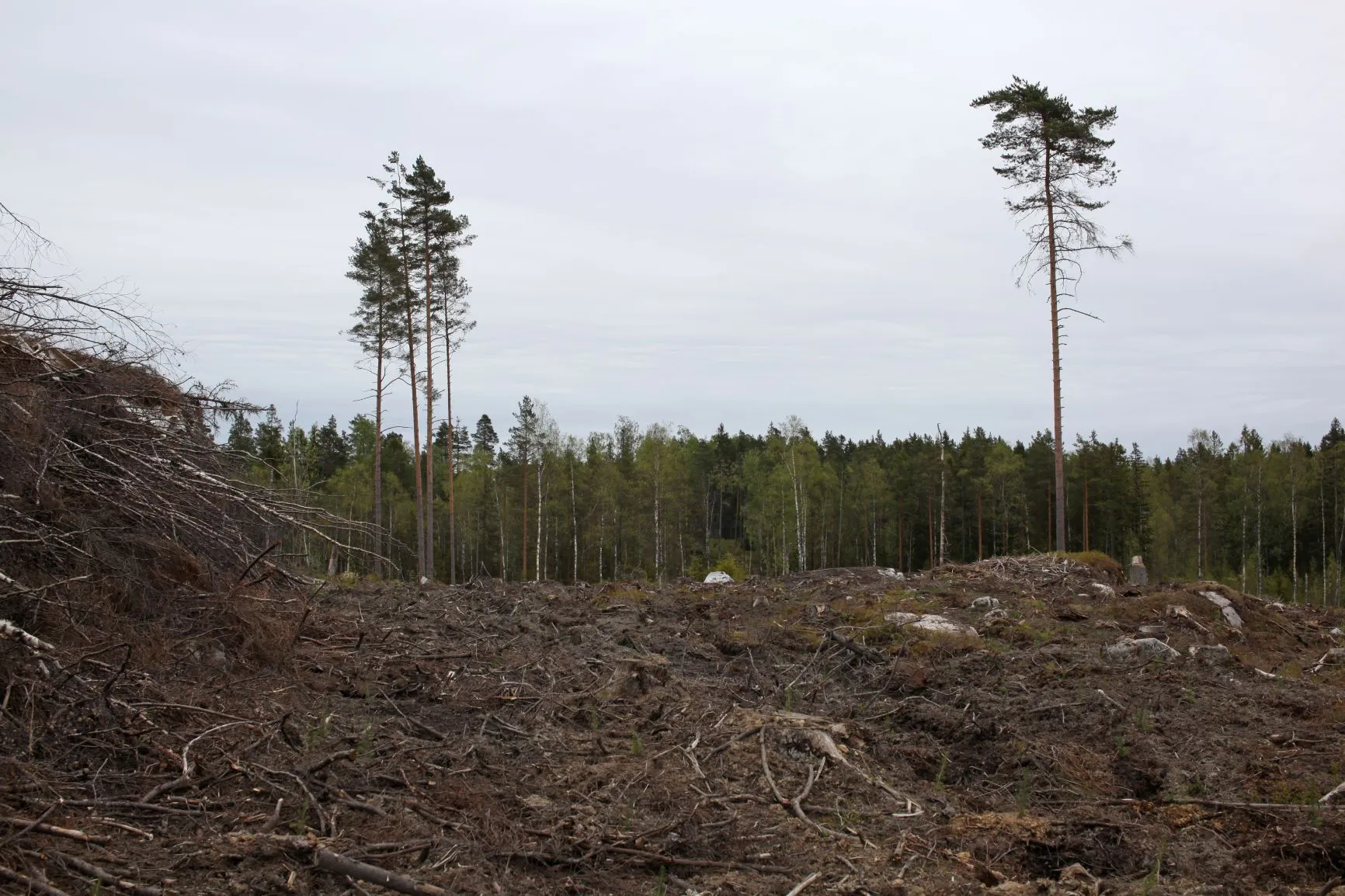
    Suomen laajenevat metsäuhat ovat jo viime vuodelta tunnettuja, kuten viime vuonna julkaistusta MY:n metsäkriisiesitteestä voi lukea.v Tuskinpa tilapäinen sellu- ja paperialan maailmanmarkkinahintojen lasku ja koronaviruksen aiheuttama tilapäinen talouden hiljeneminen aiheuttavat hetkellistä helpotusta suurempaa huoahdusaikaa Suomenkaan metsille.

    Kamppailu metsistä kiihtyy, kun muovia, betonia, puuvillaa ja fossiilienergiaa aletaan korvata puukuidulla. Metsiä on tuhottu Pohjoismaissa ennenkin, kuten esimerkiksi saamelaiset poronhoitajat hyvin tietävät. Uutta on kasvanut häikäilemättömyys ja uudenlainen kiinnostus boreaalisten ja muiden eurooppalaisten metsien puukuituun. Kun globaalin järjestelmän murtuminen tulee oman oven taakse niin ettei eurooppalainen tai edes pohjoismaalainen voi ummistaa siltä silmiään, Maan ystävillä on tukenaan maailmanlaajuinen Friends of the Earth -verkosto ja sen metsäkampanjavi.

    Eikä sillä ole väliä, minkä nimisten liikkeiden kanssa kamppaillaan, kunhan toimitaan suurin piirtein samaan suuntaan kaikille lajeille kelpaavan elämän saavuttamiseksi.

    MY:n helmikuun hallituksen kokouksen synnyttämissä ajatuksissa

    Olli-Pekka Haavisto   

    hallituksen jäsen
    Maan ystävät ry


    i Ylen Ykkösaamun vieraana on finanssikonserni Sammon ja metsäyhtiö UPM:n hallitusten puheenjohtaja Björn Wahlroos. Seija Vaaherkumpu haastattelee (25.1.2020), https://areena.yle.fi/1-50331157
     

    ii Osallisuusmedia (06.02.2020): ”30 URUGUAYLAISEN JÄRJESTÖN AVOIN JA SYYTTÄVÄ UPM-KIRJE BJÖRN WAHLROOSILLE”´, https://www.osallisuusmedia.fi/30-uruguaylaisen-jarjeston-avoin-ja-syyttava-upm-kirje-bjorn-wahlroosille/
     

    iii Vlado Vancura (20.02.2020): ”UNESCO World Heritage site renomination process in Slovakia”, European Wilderness Society, https://wilderness-society.org/unesco-world-heritage-site-renomination-process-in-slovakia/
     

    iv Skydda skogen (25.02.2020): ”Södra har avverkat nyckelbiotoper och skog i reservatsförslag vid sjön Risten i Östergötland ”, lehdistötiedote, http://skyddaskogen.se/sv/arkiv/154-svenska-kategori/aktuellt/pressmeddelanden?layout=blog
     

    v Maan ystävät ry (toukokuu 2019): ”Metsäkriisi”, https://drive.google.com/file/d/1GTCYwpkojaFEVjsk0czk1DW3e8lJK19a/view
     

    vi FoEI: ”Forests and biodiversity”, https://www.foei.org/what-we-do/forests-biodiversity

  • Questioning UPM greenwashing campaign

    To the public national and international opinion

    QUESTIONING UPM GREENWASHING CAMPAIGN

    The undersigned entities and professionals denounce the fraudulent campaign of the Finnish multinational UPM Kymmene, whose main business is the production of cellulose in Uruguay from monoculture plantations of eucalyptus, in which it presents itself as a leading global corporation in the fight against climate change, the defense of biodiversity and the sustainable water management.

    Diverse research – presented below briefly and more in detail in the annex attached to this our letter – show that it is false to claim like the UPM does that monoculture tree plantations that replace natural grasslands would favor and expand biodiversity or help mitigate climate change and prevent deforestation or would together with the cellulose plants contribute to sustainable water management.

    Recently, UPM announced its incorporation into the ”Business Ambition for 1.5 ° C” initiative launched by the United Nations Global Compact. UPM says it will strive to mitigate climate change and create innovative products, committing to reduce carbon dioxide emissions by 65% and to practice sustainable forestry.
    At the same time, UPM noted that it is one of the six leading companies worldwide for its actions to mitigate climate risk, prevent deforestation and improve water management. UPM appeared in 2019 in the Triple A List of CDP, an entity financed by companies and governments that gives companies sustainability scores to guide investors. These scores are based on self-reporting and CDP does not evaluate the actual performance of the companies on sustainability issues.

    In this way, UPM is developing a new campaign to convince investors, governments and populations of the Global South of the goodness of its projects.

    The change of land use in the grasslands characteristic of South America – the Pampa Biome – is associated with the worldwide expansion of monoculture plantations with fast-growing exotic species for cellulose production with greater profitability for companies, but with very high cost for the communities that suffer
    them.

    Testimonies of the negative social and environmental impacts of tree monocultures have been documented for more than 20 years by the World Rainforest Movement (https://wrm.org.uy/browse-by-subject/tree-plantations/).

    In addition to the displacement of rural populations, these plantations affect local productions (food sovereignty), soil (acidification and loss of organic matter and minerals, among others) and water (scarcity in areas adjacent to plantations and pollution due to the use of pesticides).

    For more than 15 years, scientists from universities in Argentina, Brazil, the United States, the United Kingdom and Uruguay, among other countries, have carried out a series of investigations on the impacts of tree monocultures and cellulose production that demonstrate the falsehood of the UPM propaganda.

    We present a list of scientific research confirming the above and attach a dossier with the summary of its results:

    A. Monocultures of eucalyptus for cellulose production are worse carbon sinks than grasslands originating in South America. In addition, most of the carbon captured by these trees is released by harvesting them and transforming them into cellulose. As part of its process, biomass is burned and other gases are released into the atmosphere, with the consequent effects on the climate.

    A1. Preliminary study of prairies forested with Eucalyptus sp. at the northwestern Uruguayan soils. Carrasco-Letelier, L., Eguren, G., Castiñeira, C., Parra, O., & Panario, D. (2003).
    https://www.researchgate.net/publication/9054561_Preliminary_study_of_prairies_forested_with_Eucalyptus_s
    p_at_the_northwestern_Uruguayan_soils/link/5a6b8e48a6fdcc317b159a21/download

    A2. Soil organic carbon vs. bulk density following temperate grassland afforestation. Céspedes-Payret, C., Bazzoni, B., Gutiérrez, O., & Panario, D. (2017). Environmental Processes, 4(1), 75–92.
    https://doi.org/10.1007/s40710-016-0197-4

    B. Monoculture plantations of trees irreversibly extract nutrients and minerals from this original ecosystem that took thousands of years to settle. Among its rows of miles of cloned trees, species of exotic fauna proliferate, such as wild boar, which are a plague for local livestock and agriculture.

    B1. Patterns and mechanisms of soil acidification in the conversion of grasslands to forests. Jobbágy, E. G., & Jackson, R. B. (2003). Biogeochemistry, 64(2), 205-229.
    https://www.researchgate.net/publication/228481637_Patterns_and_mechanisms_of_soil_acidification_in_the_
    conversion_of_grasslands_to_forests

    B2. The irruption of new agro-industrial technologies in Uruguay and their environmental impacts on soil, water supply and biodiversity: a review. Céspedes-Payret, C., Piñeiro, G., Achkar, M., Gutiérrez, O., &
    Panario, D. (2009). International Journal of Environment and Health, 3(2), 175-197.
    https://doi.org/10.1504/IJENVH.2009.024877

    B3. Land use change in a temperate grassland soil: afforestation effects on chemical properties and their ecological and mineralogical implications. Céspedes-Payret, C., Piñeiro, G., Gutiérrez, O., & Panario, D. (2012). Science of the Total Environment, 438, 549-557.
    https://doi.org/10.1016/j.scitotenv.2012.08.075

    B4. The political economy of global tree plantation expansion: a review, Markus Kröger, The Journal of Peasant Studies (2014) https://www.tandfonline.com/doi/abs/10.1080/03066150.2014.890596

    B5. Afforestation of savannas: an impending ecological disaster. Fernandes, G. W., Coelho, M. S., Machado, R. B., Ferreira, M. E., Aguiar, L. M. de S., Dirzo, R., Scariot, A., Lopes, C. R. (2016). Natureza & Conservação, 14(2), 146-151. https://doi.org/10.1016/j.ncon.2016.08.002

    C. Monocultures of eucalyptus and associated cellulose plants seriously reduce and contaminate the main sources of water in the region.

    C1. Hydrological consequences of Eucalyptus afforestation in the Argentine Pampas. Engel, V., Jobbágy, E. G., Stieglitz, M., Williams, M., & Jackson, R. B. (2005). Water Resources Research, 41(10), W10409.
    https://doi.org/10.1029/2004WR003761

    C2. Effects of afforestation on water yield: a global synthesis with implications for policy. Farley, K. A., Jobbágy, E. G., & Jackson, R. B. (2005). Global Change Biology, 11(10), 1565-1576.
    https://www.researchgate.net/publication/227862602_Effects_of_Afforestation_on_Water_Yield_A_Global_S
    ynthesis_With_Implications_for_Policy

    C3. Trading water for carbon with biological carbon sequestration. Jackson, R. B., Jobbágy, E. G., Avissar, R., Roy, S. B., Barrett, D. J., Cook, C. W., Farley, K.A., le Maitre, D.C., Mc Carl, B.A., Murray, B. C. (2005). Science, 310(5756), 1944-1947. https://doi.org/10.1126/science.1119282

    C4. Land-use change and water losses: the case of grassland afforestation across a soil textural gradient in central Argentina. Nosetto, M. D., Jobbágy, E. G., & Paruelo, J. M. (2005). Global Change Biology, 11(7), 1101-1117. https://doi.org/10.1111/j.1365-2486.2005.00975.x

    C5. Las forestaciones rioplatenses y el agua. Jobbágy, E. G., Nosetto, M. D., Paruelo, J. M., & Piñeiro, G. (2006). Ciencia hoy, 17(95), 12-21.
    https://www.researchgate.net/publication/265376623_Las_forestaciones_rioplatenses_y_el_agua

    C6. Síntesis de los efectos ambientales de las plantas de celulosa y del modelo forestal en Uruguay. Panario, D., Mazzeo, N., Eguren, G., Rodríguez, C., Altesor, A., Cayssials, R., & Achkar, M. (2006).
    https://doi.org/10.13140/RG.2.1.2929.0483

    C7. Stream acidification and base cation losses with grassland afforestation. Farley, K. A., Piñeiro, G., Palmer, S. M., Jobbágy, E. G., & Jackson, R. B. (2008). Water Resources Research, 44(7), W00A03.
    https://doi.org/10.1029/2007WR006659

    D. The installation of pulp agribusiness in the Southern Cone of America generates conflicting social and political transformations in the region.

    D1. Ecosystem services and tree plantations in Uruguay: A reply to Vihervaara et al. Paruelo, J. M. (2012). Forest Policy and Economics, 22, 85-88. https://doi.org/10.1016/j.forpol.2012.04.005

    D2. In the shadows of social licence to operate: Untold investment grievances in Latin America, Maria Ehrnström-Fuentes and Markus Kröger, Journal of Cleaner Production (2016).
    https://www.sciencedirect.com/science/article/pii/S0959652616314536

    D3. Birthing extractivism: The role of the state in forestry politics and development in Uruguay, Maria Ehrnström-Fuentes and MarkusKröger, Journal of Rural Studies (2017).
    https://www.sciencedirect.com/science/article/abs/pii/S0743016717305272

    D4. Confronting extractivism – the role of local struggles in the (un)making of place, Maria Ehrnström-Fuentes, Emerald Insight (2019). https://www.emerald.com/insight/search?q=confronting+extractivism&showAll=true

    ————————————————————

    For all the above, monocultures of exotic trees for the production of cellulose in substitution of natural grasslands are not a model of sustainable development as the agroforestry industry maintains. On the contrary, this system leads to irreversible degradation of soils and waters and initiates desertification processes as they are already being registered in Brazil.

    The international sustainability rankings prepared by entities such as CDP are used by UPM to deploy propaganda actions that justify its expansion in the Global South outsourcing pollution and greenhouse emissions to the poorest regions of the world. The promises of UPM are nothing more than a ’greenwashing’ to improve the image of the company in the local and worldwide spheres.

    We urge international organizations, governments and citizens to vehemently reject the fraudulent UPM campaign.

    Signatures follow

    Uruguayan organizations

    Coordinación Nacional contra UPM
    Comisión Nacional de Defensa del Agua y la Vida
    Movimiento por un Uruguay Sustentable (MOVUS)
    No al tren de UPM
    Asamblea por el Agua de Santa Lucía
    Asociación Ambientalista de Salto
    Movimiento por la Tierra
    Grupo Guayubira
    Mesa Nacional de Colonos
    Colectivo Ecofeminista Dafnias
    REDES/Amigos de la Tierra Uruguay
    Maldonado por la Tierra y el Agua
    Asociación Uruguaya de Guardaparques
    Fridays for Future Uruguay
    Consejo de la Nación Charrúa (CONACHA)
    Comisión Rivera por la vida sustentable y el agua
    RAPAL UruguayAsociación de Trabajadores Civiles de los Diques del Estado (ATCDE)
    Plenario intersindical social María Romana – La Paloma, Rocha
    Diario barrial La Bicicleta
    Colectivo Ñangapiré, San Gregorio de Polanco
    Ecofeminismo Rio Negro
    Partidos por el Medio, San Gregorio de Polanco
    Movimiento de Protección Ambiental de Sarandí del Yí
    Vivero Atrapasueños, San Gregorio de Polanco
    Agrupación Motoquera Cicatriz Uruguay
    Taller del arte-insano, San Gregorio de Polanco
    Periódico La Fragua
    Redes Ecologistas
    Clan Choñik (Indígenas Charrúas)
    Paysandú Nuestro
    Grupo Ecológico Naturista Sanducero / GENSA de Paysandú
    Centro de Promoción y Defensa de Derechos Humanos

    Finnish organizations

    Friends of the Landless, Finland
    Friends of the Earth Finland
    New Wind Association
    Emmaus Aurinkotehdas ry
    Katajamäki ry

    Endorsements by International organizations

    World Rainforest Movement (WRM)
    Acción Ecológica, Ecuador
    Friends of the Earth Argentina
    Guardianes del Iberá, Argentina
    FASE/ES, Brasil
    Global Justice Ecology Project
    GE Free NZ in Food and Environment, New Zeland
    RECOMA – Latin American Network against Monoculture Tree Plantations
    Organización BIOS, Argentina
    Unidad de Vinculación Ecologista – Fundación La Hendija, Paraná, Entre Ríos, Argentina
    Asociación Argentina de Abogados Ambientalistas (AAdeAA)
    Otros Mundos Chiapas/Friends of the Earth México
    OLCA – Observatorio Latinoamericano de Conflictos Ambientales, Chile
    Corporate Europe Observatory (CEO)
    The Campaign to Stop GE Trees, International
    NGO Buenos Aires Sostenible, Argentina

    Professionals and social referents

    Daniel Panario, Doctor in Environmental Technology and Water management, Uruguay
    Ofelia Gutiérrez, Doctor in Environmental Sciencies, Technology and Water Management,
    Uruguay
    Gustavo Melazzi, Doctor in Economy Specialized in Planning, Uruguay
    Aelita Moreira Viñas, Agronomist, Uruguay
    Ignacio Stolkin, Emeritus Professor Doctor in Chemical Engineer, Uruguay
    Astrid Sanchez, Architect Specialist in Strategic Environmental Evaluation, Uruguay
    Graciela Piñeiro Martínez, Doctor in Biological Sciencies, Uruguay
    Ricardo Viscardi, Doctor in Philosophy, Uruguay
    Marisa Pérez, Agronomist, Uruguay
    Alejandro Cairús, Teacher of Design, UruguayClaudia Piccini, Doctor Researcher in Biological Sciencies, Uruguay
    Liliana Terradas, Doctor in Medicine, Uruguay
    Daniel Hernández Pérez, Master in Ecological Sciencies, Uruguay
    Isabel Sans, Agronomist, Uruguay
    Daniel García Fernández, Doctor in Biological Sciencies, Uruguay
    Marcelo Loureiro, Doctor en Biological Sciencies, Uruguay
    Alicia Sans, Doctor in Medicine, Uruguay
    Carlos Anido, Engineer in Mines, Uruguay
    Lucía Delbene, Graduate in Biological Sciencies and Magister in Geo-sciencies, Uruguay
    Isabel Viana, Architect, Uruguay
    William Yohai, Doctor in Medicine, Uruguay
    Victor Bacchetta, Journalist, Uruguay
    Raul Viñas, Meteorologist, Uruguay
    Laura Rodríguez-Graña, Doctor in Oceanography, Uruguay
    Marta Chiappe, Agronomist, Doctor in Philosophy, Uruguay
    Fabiana Campos, Doctor in Odontology, Uruguay
    Juan Carlos Gómez Castro, Lawyer, Uruguay
    Ana Maria Barreiro, Lawyer, Uruguay
    Mercedes Villar Drever, Architect, Posgraduate in Ecological Engineer, HeriotWatt, Edinburgh, Uruguay
    Eduardo Bauzá, Agroecological producer, Uruguay
    Patricia Iribarne, Human Biologist and Magister in Environmental Science, Uruguay
    Virginia Cardozo, Family and Community Doctor, Uruguay
    Betty Francia, Anthropologist and agroecological producer, Uruguay
    Brenda Bogliaccini, social militant of Montevideo West side, Uruguay
    Diane Denoir, Singer and ecologist, Uruguay
    Andrés Olivetti, Professor, Uruguay
    Laura Cafaro, Social worker and alternate representative to the Uruguayan Parliament, Uruguay
    Gastón Carro, Forestry agronomist, Uruguay
    Mariana Achugar, PhD. Researcher and social activist, Uruguay
    Miguel Scapusio, Psychologist and human rights activist, Uruguay
    Valeria España, Lawyer in human rights, Uruguay
    Laura Rodríguez, Veterinary, Uruguay
    Amparo Fernández, Linguist and social activist, Uruguay
    Irene Gonçalvez , City Council member of Maldonado, Uruguay
    Juan Ángel Urruzola, Photographer, Uruguay
    Álvaro Jaume, producer and social activist, Uruguay
    Adriana Goñi, Anthropologist, Uruguay
    Laura Outeda, Professor and social activist, Uruguay
    Gabriel Delacoste, Political Scientist, Uruguay
    Hugo Cabieses Cubas, Ex Viceminister on Strategic Development of Natural Resources, Perú
    Silvana Buján, Bachelor of Communication Sciences, Argentina
    Pablo Bergel, Sociologist, ex member of the Parliament, President of the Climate Change Commission of
    Buenos Aires, Argentina
    María Ehrnström-Fuentes, Doctor of Science (Economics and Business Administration), Hanken School of
    Economics, Finland.
    Roberto Ochandio, Geographer, Argentina
    Jorge Oscar Daneri, Lawyer, Argentina
    Enrique Viale, Lawyer, Argentina
    Manuel Ludueña, Professor on Urban Sustainable in the University of Buenos Aires, Argentina

  • Kaivosryhmän tapaaminen ke 19.2. klo 17

    Kaivosryhmän tapaaminen ke 19.2. klo 17

    Kaivosryhmä kokoontuu Maan ystävien toimistolla Helsingissä Hämeentie 48:ssa keskiviikkona 19.2. klo 17 alkaen. Aiheina on ennen kaikkea Kaapelinkulman kulta -näyttelyn seuraavat vaiheet ja muut tulevat suunnitelmat. Tervetuloa paikan päälle tai etäyhteyden päähän! Jos haluat etäosallistua, ilmoita siitä sähköpostitse ennen kokousta osoitteeseen kaivokset [at] maanystavat.fi